Moth’s copy of Beowulf
The Salt PathMoth’s copy of Beowulf was a small, long-carried possession that accompanied Moth and Ray on the South West Coast Path. A thin copy of Beowulf translated by Seamus Heaney, it was the only book they took with them; its place in their tightly rationed kit made it both a practical constant and a recurring part of life on the move.
Identity and Place in the Pack
Before setting out, Moth put the book in the inside pocket of his rucksack. The pack also held a first-aid kit, a penknife and a monocular, while the tent was strapped outside; Paddy Dillon’s South West Coast Path guidebook went in a leg pocket of Moth’s combat trousers. The book was not a new addition chosen for this walk: Moth had carried it on every trip for years. Its small size suited a journey in which the travellers had to fit their lives into packs, though the account gives no weight for the volume or reason for choosing this particular translation.
Reading in the Tent
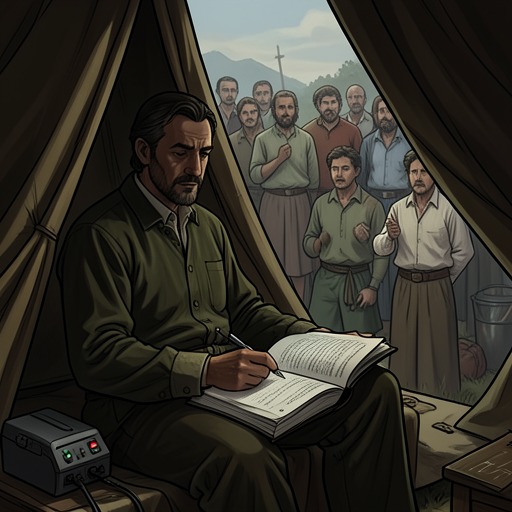
The book’s clearest role on the journey emerges in the evening routine. After checking the tent and laying out mattresses, a blanket, sleeping bags, packs, cooking equipment and clothes, Ray made tea while Moth read from the tiny volume. It was the last step in a repeated practice of turning the green tent into a place arranged for rest. Against the exposed coast and the unsettled conditions of their travels, the book’s familiar presence belonged to a pattern they could carry from one night’s shelter to the next.
A Portable Continuity
The book links Moth’s earlier trips to the long walk, retaining a place in his belongings as their circumstances changed. Its recurrence is quiet rather than dramatic: the narrative does not describe a particular passage being read or attribute decisions to the text. Instead, it gives the volume a concrete place in their shared routine. The walkers’ days were shaped by strenuous paths, weather and uncertainty; at night, after the work of making camp, Moth returned to a book he had kept with him for years.
Narrative Significance
Moth’s copy of Beowulf matters through use and persistence. It is neither a newly acquired comfort nor a prominent plot device, but an old possession carried into a period of upheaval and made part of the couple’s daily shelter. As the only book in their packs, it gives their mobile life one modest continuity: the tent, its nightly arrangement and Moth’s reading could be repeated even as the place where they slept changed.